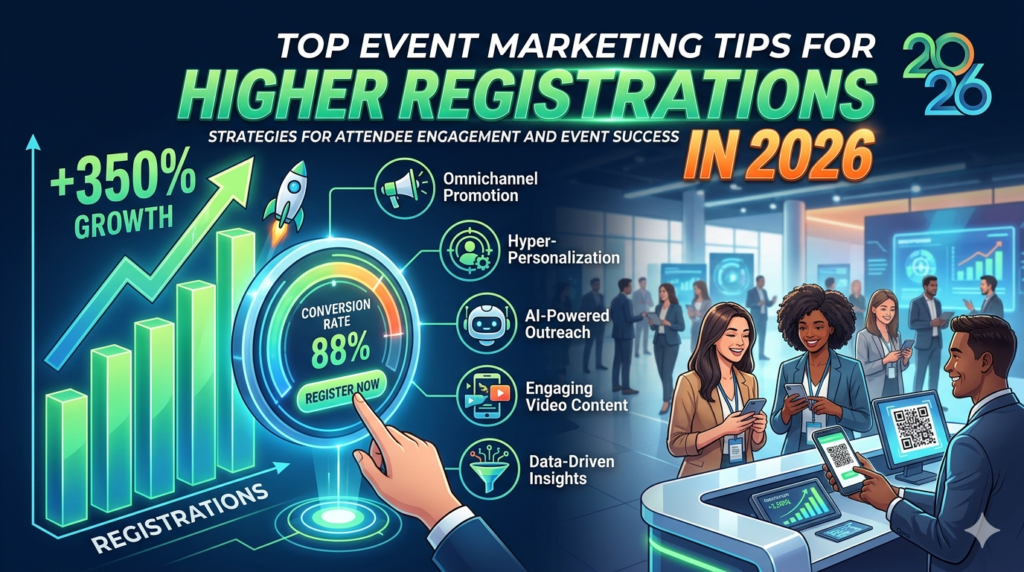
Event marketing tips for 2026 are essential for improving registrations and turning underperforming events into high-converting lead generation campaigns. You have invested time building an event that delivers genuine value. The speakers are credible. The content is relevant. And yet the registrations are not coming in the way you expected.
These event marketing tips 2026 will help you improve registrations and fix underperforming events.
In 2026, the B2B decision-makers you want in your virtual or in-person audience are busier, more selective, and more protective of their time than ever. Earning a registration from them requires a deliberate, well-timed, multi-channel approach that reaches them where they are, speaks directly to their priorities, and gives them a specific, compelling reason to show up.
Events are one of the most powerful components of a complete B2B lead generation system but only when the marketing strategy behind them is as deliberate and structured as the event content itself. This guide covers the event marketing tips that are filling seats for B2B companies right now and how you can apply them to your next event immediately.
Lead With Value in Event Marketing Tips 2026
The most fundamental shift in event marketing strategy between 2026 and previous years is the move away from event-first promotion toward value-first promotion and it changes everything about how registrations are earned.
Event-first promotion announces that an event is happening and describes its format. Value-first promotion answers one specific question before anything else what will the attendee walk away knowing or being able to do that they could not before? The answer to that question is the headline of every promotional message, email subject line, social media post, and registration page your campaign produces.
Decision-makers evaluating whether to invest two hours of their working day in your event are not making that decision based on your speaker lineup or the platform you are hosting on. They are making it based on whether the specific outcome your event promises is worth that time investment to them personally. Lead with the outcome and make it specific, concrete, and directly relevant to the professional challenges your target audience is actively managing.
Build a Strategy Using Event Marketing Tips 2026
One of the most actionable best event marketing strategies for 2026 is treating event promotion as a structured campaign with defined phases rather than a series of ad hoc announcements published whenever the team has time.
Map your complete promotional calendar before the first message goes out. The awareness phase four to six weeks out introduces the event, announces speakers, and begins building professional curiosity through content related to the event topic. The consideration phase two to three weeks out provides social proof, attendee testimonials from previous events, and more specific previews of content that will be covered. The conversion phase the final week creates urgency through limited availability signals, deadline messaging, and direct personal outreach to high-priority targets who have not yet registered.
This phased approach builds registration momentum progressively rather than concentrating all promotional effort in a single announcement period that either succeeds or fails based on timing alone.
LinkedIn Strategy for Event Marketing Tips 2026
Social media marketing for events in 2026 begins and ends with LinkedIn marketing for B2B audiences and the organizations achieving the highest registration rates from LinkedIn are using the platform in ways that go significantly beyond scheduled post announcements.
The most effective LinkedIn event promotion combines three distinct activities running simultaneously throughout the promotional period. Personal posts from team members and speakers that provide genuine insights related to the event topic not just announcements that the event exists. Meaningful engagement with content published by target attendees that builds visibility within their professional network before any direct outreach is initiated. And targeted LinkedIn Sponsored Content campaigns that place the event in front of precisely defined professional audiences who match your ideal attendee profile but have no prior awareness of your brand.
The personal content component deserves particular emphasis because LinkedIn’s algorithm consistently distributes personal posts more broadly than company page content and audiences trust individual professional voices more than branded organizational accounts. Team members who publish genuinely useful perspectives on the event topic in the weeks leading up to registration typically generate more organic registrations than any equivalent advertising spend produces.
Activate Every Speaker and Partner Relationship
How to increase event registrations beyond what your own promotional infrastructure can generate requires treating every speaker, sponsor, and partner involved in your event as an active promotional channel rather than simply a content contributor.
Confirm specific promotional commitments from every speaker during the contracting or invitation process not as an afterthought after the event is already announced. Each speaker should agree to share a defined number of LinkedIn posts, email their newsletter subscribers if applicable, and promote the event to relevant communities they participate in. When speaker promotion begins simultaneously with the event’s public launch rather than being requested weeks later, the cumulative promotional reach is substantially larger and the registrations generated from speaker networks arrive during the highest-conversion early registration period.
Partner co-promotion is equally underutilized. Organizations whose audiences overlap with your target attendee profile but do not compete directly with your business will often agree to promote your event to their audience in exchange for reciprocal promotion effectively doubling your total reach at zero additional cost and generating registrations from audiences already demonstrated to engage with professionally relevant content.
Convert Registrations Into Actual Attendees
Generating registrations is only half of the event marketing challenge converting those registrations into actual attendees on the day determines whether the pipeline value your event generates matches the promotional investment that preceded it.
Virtual event promotion ideas that consistently produce strong show rates focus on creating genuine live-attendance benefits that recordings and on-demand access cannot replicate. Live Q&A access with speakers, exclusive resources distributed only during the live session, real-time polling and interactive elements, peer networking with other attendees, and early access to post-event content all give registered contacts specific, concrete reasons to attend at the scheduled time rather than defaulting to the on-demand recording.
A structured email marketing reminder sequence sent immediately after registration, three days before the event, and on the morning of the event maintains attendee commitment through the gap between registration and event date. Each reminder should reinforce the specific value of attending live rather than simply repeating the calendar details. Events with structured reminder sequences achieve show rates that consistently exceed those with minimal or generic reminder communications.
Turn Events Into Long-Term Lead Generation Assets
The most significant opportunity in B2B event marketing trends 2026 that most organizations systematically fail to capture is the extended lead generation value available in the weeks and months after a live event concludes.
Event lead generation strategies that capture this value treat the recording, key insights, and event content as assets to be actively distributed rather than archived. A gated recording landing page optimized for relevant search keywords continues attracting and converting new leads from organic traffic for months after the live event extending the return on the original production investment without requiring additional promotional spend.
Post-event content repurposing turning key sessions into blog posts, pulling speaker insights into LinkedIn posts, and creating short-form video clips from the most engaging event moments extends the event’s reach to audiences who never encountered the original promotional campaign. Pairing this repurposed content with a structured content syndication program distributes your event recordings, key takeaways, and follow-up assets across targeted third-party B2B networks placing your expertise in front of verified decision-makers who missed your original campaign but are actively researching the exact topics your event addressed, generating qualified leads long after the live session concluded.
For your highest-engagement event attendees those who asked questions, completed polls, or stayed for the full session connecting them directly into a professional appointment setting process is the most reliable way to ensure that the strong intent demonstrated during the event converts into a confirmed, structured sales conversation before that momentum fades into the noise of their working week.
Frequently Asked Questions (FAQ)
Q1. What are the most important event marketing tips for increasing B2B registrations in 2026?
The highest-impact actions are launching promotion four to six weeks before the event with a phased calendar that builds momentum progressively, leading all messaging with the specific attendee outcome rather than the event description, activating speaker and partner networks simultaneously with the public launch, combining organic LinkedIn content from individual team members with targeted paid promotion, and following up with direct personal outreach to high-priority targets who have not registered in the final week before the deadline.
Q2. How should B2B companies use social media to market events in 2026?
LinkedIn is the primary platform for B2B event social media marketing. Individual team members and speakers should publish genuine insights related to the event topic consistently throughout the promotional period rather than simply sharing event announcements. Paid LinkedIn Sponsored Content campaigns should target precisely defined professional segments matching the ideal attendee profile. Engagement with target prospects’ own LinkedIn content builds pre-outreach visibility that makes subsequent direct registration invitations significantly more likely to convert.
Q3. What virtual event promotion ideas work best for filling seats in 2026?
Virtual events achieve the strongest attendance rates when they offer meaningful live-only benefits real-time Q&A with speakers, exclusive resources not shared with on-demand viewers, interactive polls, peer networking, and early content access combined with a structured three-stage reminder sequence that keeps registered attendees committed to attending live rather than defaulting to the recording. Speaker and partner network activation, LinkedIn paid promotion, and direct personalized outreach to high-value non-registrants in the final week all contribute to registration volume.
Q4. How do B2B events generate qualified sales leads?
Events generate qualified leads through multiple mechanisms simultaneously qualifying registration forms that capture professional data, live engagement signals like questions and poll responses that indicate genuine buying interest, structured post-event follow-up sequences segmented by engagement level, and gated recording landing pages that continue attracting and converting new leads from organic search long after the live event. The most effective event lead generation programs treat each event as an ongoing asset rather than a single-day occurrence.
Q5. What B2B event marketing trends matter most for 2026?
The most impactful trends in 2026 include value-first messaging that leads with attendee outcomes rather than event descriptions, intent data integration that identifies which target accounts are actively researching the event topic, AI-powered personalization in promotional sequences, hybrid event formats serving live and virtual audiences simultaneously, extended on-demand content strategies that convert events into long-term lead generation assets, and co-promotional partnerships that multiply reach without increasing promotional spend.
Q6. How should B2B companies follow up with event leads after the event?
Send personalized follow-up emails to all attendees within twenty-four hours, segmented by engagement level. Active participants who asked questions or engaged with polls receive more direct commercial outreach. General attendees receive value-focused nurture communication. Non-attendees receive the recording with a warm, low-pressure reconnection invitation. Connect with high-intent attendees on LinkedIn to extend the relationship beyond the event interaction. Assign qualified leads to structured sales outreach sequences with a defined timeline and defined next steps.
Q7. How do you measure event marketing success beyond registration numbers?
Registration count is only the first measurement layer. Track registration-to-attendance conversion rate to evaluate reminder effectiveness. Track attendee engagement metrics questions submitted, poll responses, session duration to identify highest-intent prospects. Track lead-to-meeting conversion rate to connect event activity to sales pipeline. Track meeting-to-opportunity and opportunity-to-revenue metrics to measure the true commercial return from event investment. These downstream metrics reveal whether your event marketing strategy is generating genuine pipeline value or simply generating activity.
Fill Your Events and Convert Attendees Into Revenue
At CFT B2B Leads, we help B2B companies design and execute complete event marketing strategies that attract qualified audiences, maximize registration and attendance rates, and convert event engagement into measurable sales pipeline. From promotional campaign planning and multi-channel execution through speaker activatioDiscover proven event marketing tips for 2026 to boost B2B registrations, improve attendance, and turn events into high-quality lead generation assets.n, post-event lead follow-up, and pipeline reporting our team manages every element of the process so your events deliver commercial results that justify every dollar invested.
Email: contact@cftb2bleads.com
Website: www.cftb2bleads.com
USA Office: 973-814-2525
Contact us today and let’s build an event marketing strategy that fills your next event with the qualified prospects your sales team needs to close more business in 2026.